A 3-tonne machine worth £120,000 goes by road to Poland. It’s dropped at a cross-dock and written off. No cargo insurance: the shipper assumed the carrier was covering it.
Under CMR, the carrier’s liability is capped at 8.33 SDR per kilo. That’s roughly £25,000. The shipper absorbs the other £95,000.
Most freight losses and delays aren’t bad luck. They’re the same avoidable mistakes, repeated across thousands of shipments. Here are the freight shipping mistakes that cost the most.
Table of Contents
- Documentation errors that stop shipments cold
- Packaging and labelling failures
- Choosing the wrong transport mode
- Timing and scheduling errors
- Insurance and liability oversights
- Communication breakdowns
- Working with inexperienced or inappropriate partners
- How to avoid freight shipping mistakes
Documentation errors that stop shipments cold
Missing or incomplete paperwork
The number one cause of customs delays is documentation that’s either missing entirely or filled out incorrectly. Commercial invoices, packing lists, certificates of origin, and customs declarations all need to be accurate and complete before your goods can cross international borders.
Since the UK left the EU, UK-EU shipments require significantly more documentation than they did previously. Every shipment needs a customs declaration, and depending on what you’re moving, you might need additional certificates, licences, or compliance documents.
Incorrect HS codes and valuations
Harmonised System (HS) codes classify your goods for customs purposes and determine what duties and taxes apply. Get the code wrong, and you’re either going to overpay on duties or trigger a customs query that delays your shipment.
Declaring incorrect values is equally problematic. Some businesses undervalue shipments thinking they’ll pay less duty. This is illegal, and customs authorities are very good at spotting it. Use the correct HS codes for your products, declare accurate values, and keep records that support your declarations.
UK imports use a 10-digit commodity code, not just the 6-digit HS code, and the last four digits often decide the duty rate.
Packaging and labelling failures
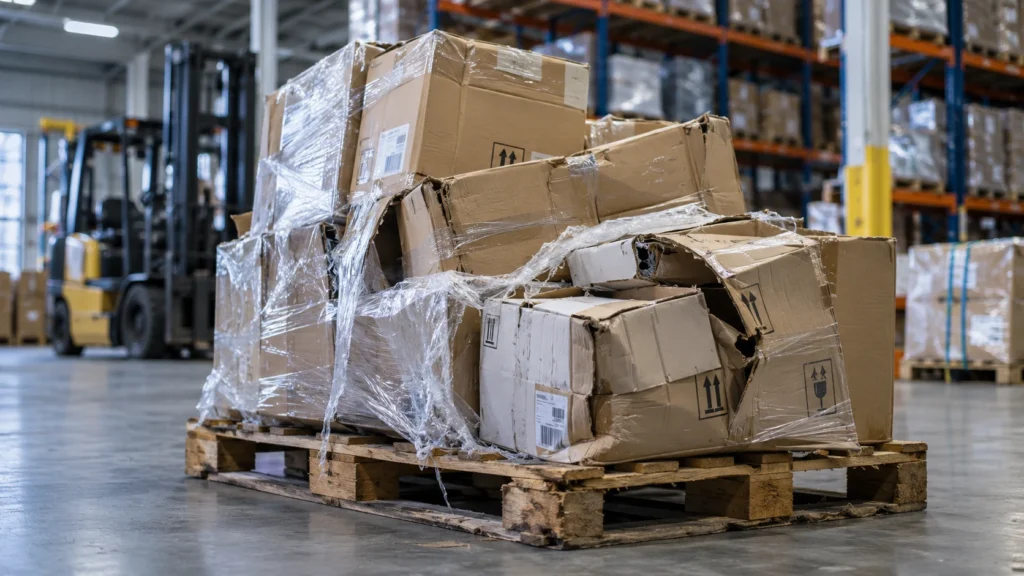
Inadequate packaging causes damage long before the final mile. Freight is handled multiple times, often by machinery, so weak or unsuitable packaging leads to breakages, delays, and added costs. Common issues include boxes that cannot support the weight, unsecured items, poor stacking protection, and lack of moisture or temperature resistance.
Poor labelling creates further risk. Labels must be clear, durable, and easy to scan. Hazardous goods require compliant international markings, and fragile items need clear identification. Incorrect or missing labels can delay or even stop a shipment entirely.
Choosing the wrong transport mode
Speed versus cost miscalculations
One of the costliest mistakes in logistics is choosing the wrong transport mode. Businesses often default to the cheapest option without accounting for the true cost of delays.
Air freight costs more per kilo than sea freight, but for time-sensitive cargo, the impact of late delivery can far outweigh any savings. Delays lead to production stoppages, missed sales, penalties, or costly last-minute fixes.
Equally, paying for air freight when time is not critical wastes budget. The right choice comes from matching the transport mode to the real urgency of the shipment, not habit or headline cost.
Ignoring cargo characteristics
Different freight modes suit different cargo. Heavy, non-urgent goods move best by sea, while lightweight, high-value, or perishable shipments often justify air freight. Within Europe, road freight offers the most speed and flexibility.
Oversized and heavy cargo needs planning from day one: flat racks or breakbulk by sea, abnormal load permits and escorts by road, and route surveys before anything is booked. Treating OOG like standard freight is how a shipment ends up waiting for a permit at the border.
Choosing the right mode early avoids delays, restrictions, and costly last-minute changes.
Timing and scheduling errors
Unrealistic transit expectations cause costly mistakes. Every freight mode has limits. Sea freight takes weeks, and even air freight includes collection, customs clearance, and final delivery.
Problems arise when delivery promises are based on optimistic assumptions. Building in buffer time, especially for customs, is essential as clearance times vary.
Peak seasons add further pressure. Capacity tightens, prices rise, and transit times extend. Businesses that plan ahead, book early, and stay flexible avoid paying premium rates for limited space.
Insurance and liability oversights
Shipping without adequate cover
Freight insurance isn’t included automatically. Carriers have limited liability, often far less than your goods’ actual value. If something goes wrong without proper insurance, you might recover a fraction of what your shipment was worth.
Under CMR (international road), carrier liability is capped at 8.33 SDR per kilo. Under the Montreal Convention (air), it’s 26 SDR per kilo. Under Hague-Visby (sea), it’s 666.67 SDR per package or 2 SDR per kilo, whichever is higher. An SDR is worth roughly £1, so a high-value, lightweight shipment can be covered for a fraction of its worth.
Insurance costs a relatively small percentage of your shipment value. The cost of replacing an entire uninsured shipment can be catastrophic. Different types of cover exist, from basic named-perils policies to comprehensive all-risk insurance.
Zenith can arrange full cargo insurance on request. Ask when you book, not after something goes wrong.
Not understanding liability limitations
When multiple parties handle a shipment, understanding who’s responsible for what becomes important if something goes wrong. Limited liability clauses mean that even if a carrier is at fault, their financial responsibility might be capped well below your actual loss.
Using one forwarder end to end doesn’t remove liability limits, but it removes the gaps between them: one party owns the problem instead of three passing it around. The caps still apply, which is why cargo insurance matters.
Communication breakdowns
Poor visibility and tracking create knock-on problems across the business. Without accurate shipment information, you cannot update customers, plan receiving, or respond to delays in time.
Modern freight should include proactive updates. Finding out about a problem after it’s caused disruption isn’t acceptable service.
Language and cultural barriers add further risk. Clear instructions, written confirmation, and not assuming shared interpretations help prevent costly misunderstandings in international shipping.
Working with inexperienced or inappropriate partners
Choosing based solely on price
In freight forwarding, the cheapest option often becomes the most expensive. Low quotes usually hide gaps in documentation, customs expertise, insurance, or carrier reliability.
When delays, damage, or border issues occur, any upfront savings disappear fast. The true cost includes lost goods value, replacement shipping, customer compensation, and time spent fixing avoidable problems.
The right forwarder isn’t the cheapest quote. It’s the one whose quote doesn’t change after the goods move. Strong customs knowledge, reliable carrier networks, and proactive planning prevent issues before they disrupt your supply chain.
Fragmented service providers
Using multiple providers across collection, transport, customs, and delivery creates gaps where problems hide. When issues arise, responsibility gets passed around and resolving them becomes slow and unclear.
Fragmentation also limits visibility. No single party has the full picture, information breaks down between stages, and delays multiply. Instead of a simple door-to-door move, you end up managing the logistics yourself instead of running your business.
How to avoid freight shipping mistakes
Most freight shipping mistakes come down to poor planning, limited knowledge, or false cost savings that create bigger problems later. Avoiding them is straightforward but requires discipline.
Understand your cargo, destination, and urgency. Different shipments need different approaches, and one-size-fits-all rarely works.
Get documentation right before the shipment moves, including HS codes, valuations, and compliance requirements. Guessing leads to delays.
Choose transport modes based on real needs and total cost, not habit or headline price. Work with freight forwarders who know your trade lanes and cargo, even if they are not the cheapest.
Build realistic timelines, insure properly, and maintain visibility throughout the journey so issues are addressed early, not after damage is done.
Shipping something where getting it wrong isn’t an option? Send us the commercial invoice and packing list before it moves, and we’ll flag what customs will question: https://zen-intl.co.uk/contact/.